
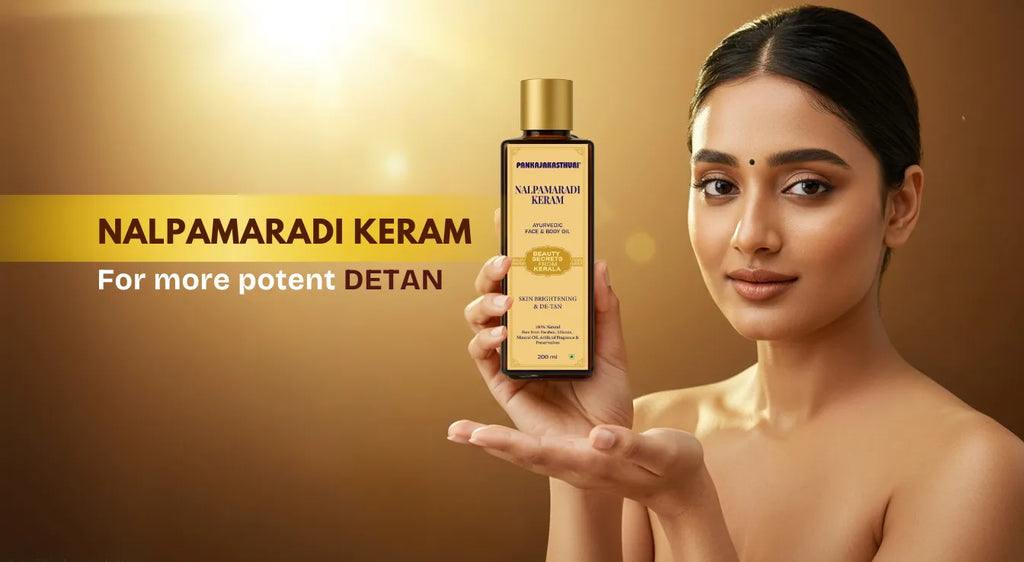
Nalpamaradi Oil: The Complete Guide to Tan Removal, Glow & Ayurvedic Skin Healing

Have you ever opened a blog, read two lines, and instantly felt your brain check out?
Same. And honestly, skincare blogs are some of the worst offenders — too formal, too complicated, and way too long-winded.
So today, let’s talk about Nalpamaradi Oil the way we would if you and I were sitting with a cup of chai: warm, simple, and straight to the point… with a little glow-getting magic sprinkled in. ✨
What Is Nalpamaradi Oil? A Quick Ayurvedic Overview
If you’re new to Ayurvedic skincare, Nalpamaradi Oil (also called Nalpamaradi Thailam or Nalpamaradi Keram) is basically the OG glow potion.
It’s a golden herbal oil that has been used for generations in Kerala’s beauty rituals — especially for brightening the skin, fading pigmentation, and removing tan.
The star of the show?
Nalpamaram — a traditional blend of four sacred Ficus tree barks known for calming inflammation and correcting pigmentation.
Mix that with turmeric, manjistha, vetiver, amla, and nourishing base oils like sesame or coconut… and you get an Ayurvedic powerhouse that makes your skin look clearer, softer, and way more radiant.
Why Nalpamaradi Oil Is Famous for Tan Removal
Let’s be honest — in India, sun exposure is not a “summer problem.” It’s an all-year problem.
That’s exactly why Nalpamaradi Oil became so popular.
Natural tan-removal action
This oil works by gently reducing melanin buildup caused by UV exposure. Over time, it helps fade:
-
Sun tan
-
Dark patches
-
Dullness
-
Sun-induced pigmentation
Skin-brightening oil benefits
Its brightening effect isn’t just “cosmetic.” It comes from powerful Ayurvedic herbs that target the root causes of discoloration — not just the surface.
It’s the perfect combo of tradition + results.
Top Benefits of Nalpamaradi Oil for Daily Skincare
There’s a reason Nalpamaradi Oil is trending on Instagram and also trusted by Ayurvedic doctors — it works beautifully for everyday skin maintenance.
1 Brightens Dull Skin
Feel like your skin has lost its spark?
The turmeric–manjistha combo boosts your glow and makes your complexion look more alive.
This is the classic Nalpamaradi Thailam skin brightening benefit most people notice in week one.
2 Reduces Pigmentation & Dark Spots
Its herbs slowly reduce melanin accumulation, so over a few weeks, you’ll see:
-
Lightened marks
-
Softer pigmentation
-
Reduced uneven patches
3 Improves Uneven Skin Tone
Everyday massage increases microcirculation, which supports your skin to look fresh, even, and healthy.
4 Hydrates & Nourishes the Skin
Because this oil is made with sesame or coconut oil, it deeply moisturizes and upholds the skin barrier.
People with dry or difficult skin see the biggest transformation.
How Nalpamaradi Oil Works: Key Ayurvedic Ingredients
Here’s where the magic happens — the Nalpamaradi Thailam ingredients.
Sesame Oil
Sesame oil makes the base of this blend. It’s rich, soothing, and easy for the skin to consume. It helps the herbs sink in and keeps dry patches under control. It also supports the skin barrier.
Turmeric
Turmeric is the star of these components. It brightens the skin, fights tan, and slowly fades pigmentation. It also gives the oil that beautiful golden colour. If your skin looks dull or uneven, turmeric is normally the primary component that makes a clear difference.
Amla
Amla brings antioxidants to the mix. It lightly exfoliates, removes lifeless pores and skin buildup, and protects the skin from daily harm. It’s one of those elements that quietly works in the historical past to hold your complexion fresh.
Vetiver
Vetiver has a naturally cooling and calming effect. It’s amazing for indignant, warm, or sun-uncovered pores and skin. If you cope with redness or heat, vetiver soothes it and brings the skin back to balance.
Manjistha & Sandalwood
These 2 herbs focus on readability. They assist reduce blemishes, tone the skin, and maintain inflammation at bay. They add that easy, refined end to the method, making the skin look greater even and healthy.
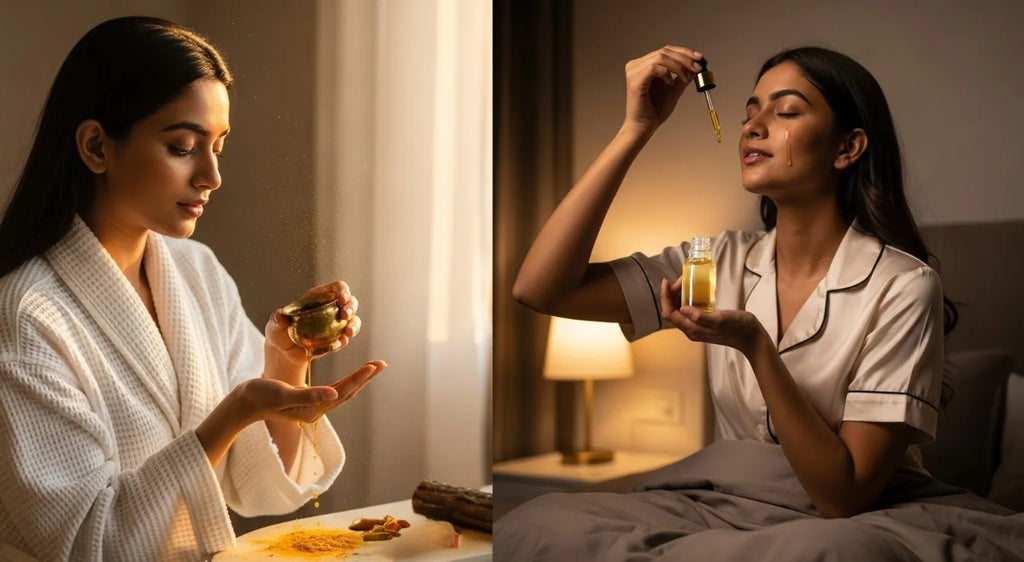
How to Use Nalpamaradi Oil for Tan Removal & Even-Toned Skin
Yes, the product is great…
But the method matters just as much.
Here’s the simplified version of the way to use Nalpamaradi Thailam for the face and body:
Step-by-Step Usage
-
First start with a simple wash, dry skin with a tender towel.
-
Next take some drops and massage lightly in upward, circular motions.
-
Most importantly let it sit for 20–30 minutes.
-
And lastly wash it off with a mild cleanser.
How long to keep it on?
-
In the Morning 20–30 minutes
-
In the Night can be left on overnight if your skin tolerates turmeric and heavier oils well
And yes — sunscreen is a MUST afterward.
Frequency for best results
Use 3–4 times a week.
Daily usage is fine if your skin loves it.
Benefits of Nalpamaradi Thailam for Skin
If we had to sum it up, here’s what this oil does best:
-
Brightens dull skin
-
Removes tan
-
Reduces pigmentation
-
Calms redness & irritation
-
Fades dark spots
-
Nourishes dry skin
-
Improves overall complexion
Basically, it’s your skincare multitasker — the Ayurvedic equivalent of a “do-it-all” product.
Daily Skincare Routine Using Nalpamaradi Oil
Want the fastest results? Here’s an easy routine:
Morning Routine
-
Cleanse
-
Apply Nalpamaradi Oil (20–30 mins)
-
Wash off
-
Moisturize
-
Sunscreen (non-negotiable!)
Night Routine
-
Cleanse
-
Light exfoliation (2x a week)
-
Massage Nalpamaradi Oil
-
Wash after 30 minutes or leave overnight
-
Follow with moisturizer if your skin needs it
This routine supports faster tan removal and deeper skin repair.
Nalpamaradi Oil vs Other Ayurvedic Oils
Nalpamaradi vs Kumkumadi
-
Nalpamaradi: Best for tan removal, pigmentation, body brightening
-
Kumkumadi: Best for facial glow, dryness, anti-aging advantages
Nalpamaradi vs Turmeric Oil
-
Nalpamaradi has a balanced blend of herbs
-
Turmeric oil alone can be too strong or staining
-
Nalpamaradi is gentler, more nourishing, and more effective for tanning & pigmentation
Who Should Use Nalpamaradi Oil? Skin Types & Suitability
Because everyone’s skin behaves differently, here’s the quick guide:
Great for:
-
Dry skin
-
Normal skin
-
Combination skin (in small amounts)
Use with caution:
-
Oily or acne-prone skin so sesame oil may clog pores
Sensitive skin?
Patch-test first!
Turmeric is powerful — great for glow, not great for super-reactive skin.
Best Time to Apply Nalpamaradi Oil for Maximum Results
Both day and night work — but differently.
Daytime
-
20–30 min application
-
Helps brighten and prep the skin
-
MUST follow with sunscreen
Nighttime
-
Best for deep repair
-
You can leave it on overnight if suitable
-
Great for pigmentation reduction
Faster Tan Removal Tips
-
Use 3–4 times a week
-
Add gentle exfoliation twice weekly
-
Stay hydrated
-
Always use sunscreen
Final Thoughts
Nalpamaradi Oil isn’t just a “trend.” It’s a centuries-old Ayurvedic formula that still delivers real, visible, glow-boosting results.
If you're dealing with tanning, pigmentation, dullness, or uneven skin tone — this oil is absolutely worth trying.
It’s simple, natural, effective… and honestly, kind of a skincare game-changer.
FAQ
Related post


20
Sep

23
Jan