
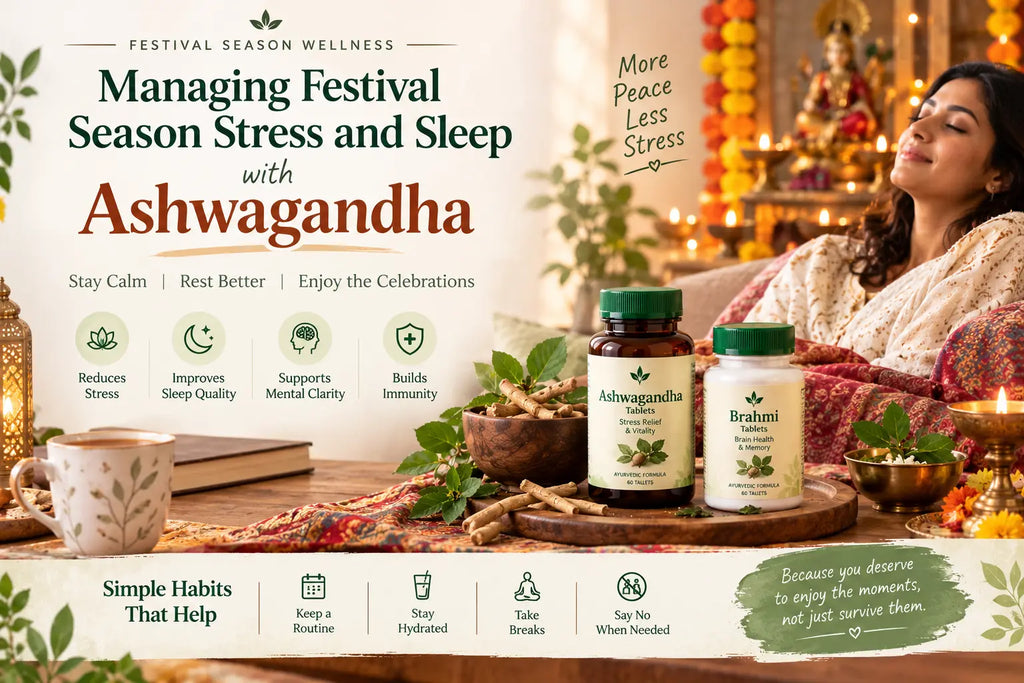
Managing Festival Season Stress and Sleep with Ashwagandha
Somewhere between Navratri, Dussehra, and Diwali, most households go through nearly a month of heightened activity — shopping, cleaning, cooking, hosting, travelling to see family, staying up later than usual for pujas and celebrations. It's genuinely joyful, and also, if anyone's honest about it, genuinely exhausting. By the time the last diya is lit, a lot of people feel more depleted than refreshed, even after weeks of celebration.
This isn't just about being busy. Late nights, disrupted routines, richer food, and the low-grade social pressure of hosting or attending back-to-back events all add up to a specific kind of stress that doesn't always look like stress — it looks like festival fatigue.
Why Sleep Suffers Specifically During Festival Season
Pujas often run late, garba nights stretch well past midnight, and Diwali celebrations can go on even longer. Add to that houseguests, changed routines, and general excitement, and sleep quality drops even on nights when you technically get enough hours. Ayurveda ties this directly to Vata imbalance — the same dosha associated with restlessness and an overactive mind, both of which spike when routine and rest get disrupted for weeks at a stretch.
Where Ashwagandha Fits In
Ashwagandha is one of Ayurveda's most established adaptogens, traditionally used to help the body manage accumulated stress rather than address any single symptom in isolation. Ashwagandha Tablets taken consistently through the festival stretch — rather than only on the nights sleep feels particularly disrupted — tend to work better, since adaptogens generally build their effect over days rather than acting instantly.
If mental fatigue or a scattered, overstimulated feeling is more of the issue than physical exhaustion, Brahmi Tablets are traditionally used alongside Ashwagandha for exactly this kind of mental overload, and the two are commonly paired during periods of sustained stress.
Beyond the Herb Itself
Ashwagandha works better as part of a broader approach than as a standalone fix during a genuinely disrupted month:
-
Try to anchor at least one part of your daily routine — a consistent wake-up time works better than a consistent bedtime during festival season, since bedtime is often unavoidably late.
-
Keep hydration up; festival food and late nights both contribute to dehydration, which worsens fatigue independent of sleep quality.
-
Build in short recovery windows — even fifteen minutes of quiet after a late event helps the nervous system downshift before actually trying to sleep.
-
Say no to at least one event if the calendar is genuinely overloaded; Ayurveda's emphasis on routine assumes some boundaries, not infinite availability.
A Realistic Timeline
Starting Ashwagandha around the beginning of Navratri (October 11) and continuing it through Diwali and a week or two after gives the body sustained support across the entire high-stress stretch, rather than reaching for it only once exhaustion has already set in around Diwali. The night oiling ritual covered in our piece on day and night body oiling pairs naturally with this — Abhyanga is another Ayurvedic tool specifically aimed at calming an overstimulated nervous system.
FAQs
How long does Ashwagandha take to help with stress and sleep?
Most people notice a gradual difference over one to two weeks of consistent use rather than an immediate effect, which is why starting early in the festival season works better than starting late.
Can I take Ashwagandha and Brahmi together?
Yes, they're commonly used together, addressing physical stress resilience and mental clarity respectively, and many people find the combination more effective during particularly demanding periods.
Is festival exhaustion actually stress, or just tiredness from being busy?
Often both — the physical tiredness from activity and travel compounds with the Vata-aggravating effects of disrupted routine and late nights, which is why rest alone doesn't always fully resolve it.
Festivals aren't meant to be recovered from — they're meant to be enjoyed. A little structure around sleep and stress through the month makes it much easier to actually be present for the parts that matter, instead of running on fumes by the time Bhai Dooj rolls around.
Related post


29
Oct